

Overview: Retinol is one of the most researched and effective skincare ingredients available today. Known for improving texture, reducing wrinkles, and boosting collagen, it’s a staple in many routines. This guide breaks down the benefits of retinol, explains how it works, and clears up common myths so you can use it safely and effectively.
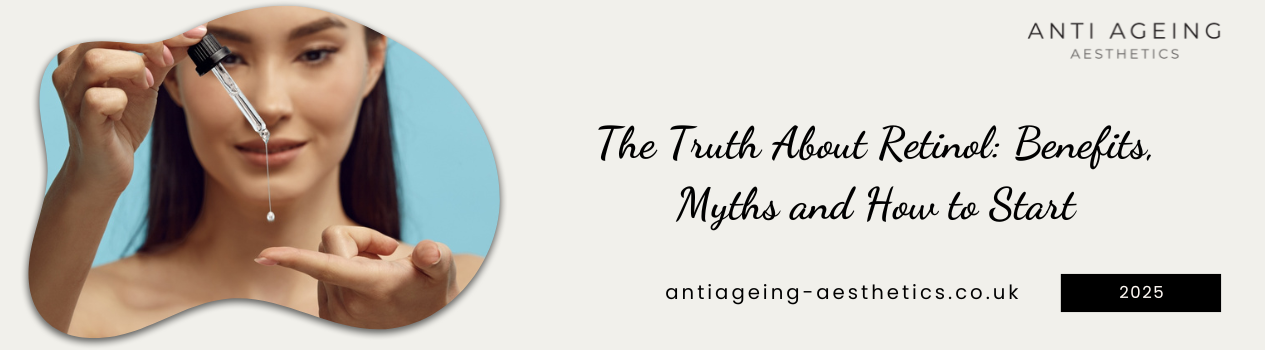
If there’s one skincare ingredient you really don’t want to overlook, it’s retinol. With so much noise around which products actually deliver results, retinol consistently stands out as a proven performer.
While retinol can be a powerful addition to your routine, there are a few important things to understand before you start using it. In this guide, we explore the benefits of retinol, who it’s suitable for, and dispel some of the most common myths surrounding this skincare staple.
What is retinol?
Retinol is a form of vitamin A that speeds up skin cell turnover, helps unclog pores, reduces fine lines and wrinkles, and boosts collagen production. Unlike many skincare ingredients that overpromise, retinol delivers visible results when used correctly.
The benefits of retinol are well documented through decades of research, making it one of the most science-backed skincare ingredients available. Best of all, it can be introduced into a routine at almost any age.
Retinol is available over the counter, while stronger prescription versions are referred to as retinoids or tretinoin.

Benefits of retinol
The main benefits of retinol include:
- Improved skin texture and tone over time
- Reduced fine lines and wrinkles
- Fewer breakouts due to unclogged pores
- Fading of dark spots and pigmentation
- Increased collagen production for plumper-looking skin

Myths about retinol to ignore
Despite being one of the most studied skincare ingredients, retinol is still surrounded by misinformation online. Here are some common myths and the truth behind them.
Myth #1: Retinol thins your skin
Peeling during the adjustment phase can give the impression of thinning skin, but retinol actually thickens the skin over time by stimulating collagen production.
Myth #2: You can’t use it in the summer
Retinol can be used year-round, including summer. However, it increases sensitivity to UV rays, so daily SPF use and sun avoidance during peak hours are essential.
Myth #3: It’s not great for sensitive skin
Those with sensitive skin can still use retinol, but it should be introduced gradually and at a lower strength. Stronger products aren’t always better — starting slowly can help minimise irritation and breakouts.
Summary
Retinol is a powerful, evidence-based skincare ingredient that can improve wrinkles, blemishes, uneven texture, and loss of firmness. With consistent use, skin often becomes smoother, firmer, and more even in tone. As with any active ingredient, listening to your skin and adjusting usage is key to long-term success.
Thinking About Upgrading Your Skincare?
If you’d like professional advice on achieving healthier skin, learn more about our skin treatments for different concerns or contact us to speak with our friendly team.